
Review · POLAND
SUP Private Tour in Motlawa River
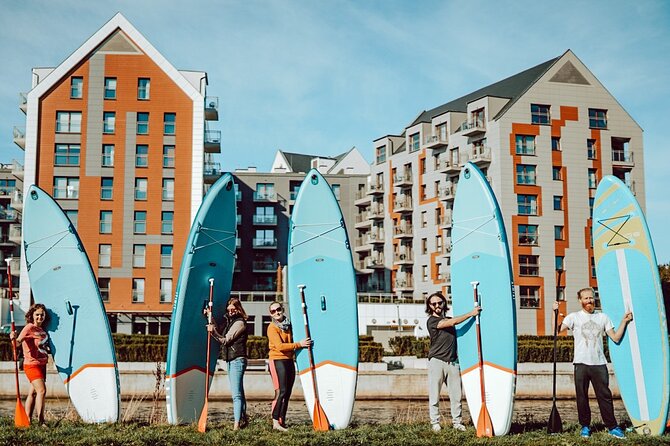
Gdańsk’s old waterfront looks good from the quayside, but it makes more sense from water level. On this private SUP tour, you paddle past the medieval Crane, old granaries, restored gates, bridges, and the museum ship SS Soldek while the city rises around you.
I like two things right away. First, the route gives you a fresh view of central Gdańsk without putting you on a crowded sightseeing boat. Second, guide Hania brings local knowledge and a personal connection to the city. The main consideration is simple: you need decent balance and good weather, and the activity can be canceled if conditions are poor.
Key points to know before booking
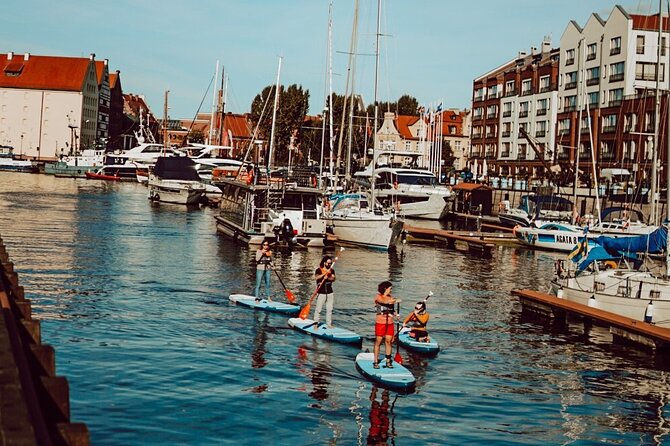
- The route passes Gdańsk’s best waterfront sights, including the Crane, Green Gate, Granary Island, Ołowianka, and SS Soldek.
- Guide Hania leads the experience, adding stories about the city’s trade, gates, ships, and changing waterfront.
- The tour is private, so only your group takes part. That makes it easier to set the pace and ask questions.
- All main SUP equipment is supplied, including the board, paddle, leash, and life jacket.
- The water route lasts about 1 hour 40 minutes to 2 hours 30 minutes, depending on the exact experience and conditions.
- Bring your own water, since bottled water is not included.
Why Gdańsk is especially good from a paddleboard
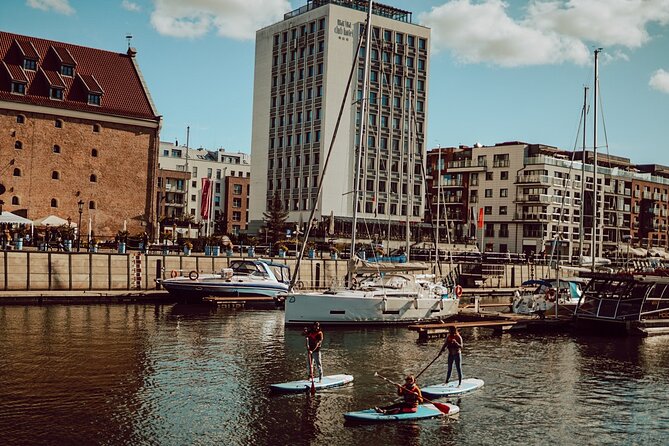
The Motława is not just a scenic river beside the old town. It was the working edge of Gdańsk, tied to the city’s trade, shipping, storage, defenses, and political life. From a paddleboard, you see how closely those parts fit together.
The river also changes your sense of scale. From the Długie Pobrzeże embankment, the Crane is an impressive historic building. From the water, it feels larger and more useful, with its old lifting mechanism and waterfront position clearly tied to cargo handling. Bridges and gates also make more sense when you see the routes they controlled.
This is a sightseeing activity, but it is also active recreation. You are not sitting back while someone else does all the work. The paddling is described as easy and relaxing, though balance matters. If you have never used a SUP board, you may spend the first few minutes finding a comfortable rhythm.
The private format helps here. Hania can give your group attention instead of addressing a large mixed crowd. You can ask about a building as you approach it, pause for a better look, or take the route at a pace that suits your group.
More River and Canal SUP Tours in the world:
- Haleiwa River Paddle Board Rental with Blue Planet Adventure Co.
★ 5.0 · 215 reviews - Seville Paddle Surf Sup in the Guadalquivir River
★ 5.0 · 198 reviews - Half-Day Private SUP along Soca River
★ 5.0 · 143 reviews
Starting at Kamienna Grobla
The tour begins at Kamienna Grobla, at 80-700 Gdańsk. From there, you get set up with the board, paddle, leash, and life jacket before heading onto the Motława.
The start point is useful because the tour does not begin in the middle of the busiest old-town foot traffic. You should still allow enough time to reach it without rushing. The activity is near public transportation, which makes it practical to fit into a day of sightseeing.
The timing options are another small advantage. Gdańsk’s waterfront can feel different in changing light, and a choice of departure times lets you place the tour around museums, meals, or a walk through the old town. The exact outing takes roughly 1 hour 40 minutes to 2 hours 30 minutes, so it is long enough to feel like a real activity without taking the whole day.
Długie Pobrzeże and the spirit of the old port
The first major part of the route follows the Motława embankment at Długie Pobrzeże. This is where Gdańsk’s old maritime identity is easiest to read. The waterfront is lined with historic buildings, gates, restaurants, and former commercial spaces, but the river keeps the focus on the city’s port past.
From the board, you are close to the waterline and can look up at the embankment rather than simply looking across at it. That low view makes the old waterfront feel more connected to ships and cargo than it does from a pavement.
This portion is also a good introduction to the activity. You are close to central landmarks, but you are not trying to cover a huge stretch of river. It gives you time to settle your balance before the route moves on.
The Crane, Gdańsk’s clearest waterfront symbol
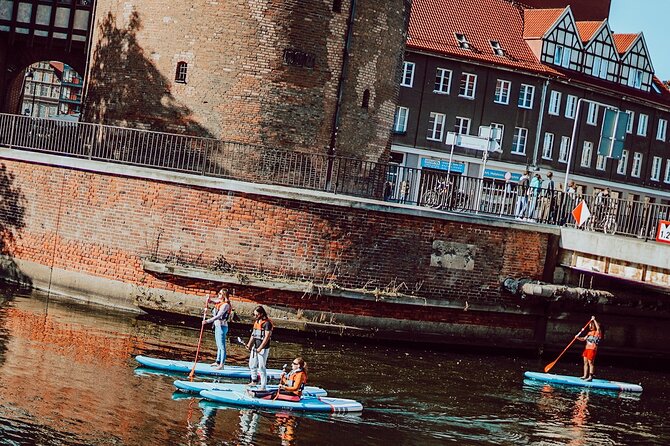
The Crane is one of Gdańsk’s defining sights. It represents the city’s great trading age, while also reminding you that much of the original port world has disappeared.
Seeing it from the river is the point. The building was designed for work on the waterfront, so its shape and position become clearer from a paddleboard. You are looking at the same side of the structure that once faced ships arriving with goods.
The scheduled stop here is brief, around 10 minutes, but it is one of the most worthwhile pauses. You can take in the Crane, listen to the story behind it, and see how it relates to the embankment and nearby gates. If you want a classic Gdańsk photograph, this is likely to be one of your best angles.
More Private SUP Tours in the world:
- Private Stand Up Paddle Boarding Tour in Turtle Town, Maui
★ 5.0 · 293 reviews - Private Catamaran Swim sail snorkel cliff jumping SUP
★ 5.0 · 232 reviews - Family, Private & Group Standup Paddle Lessons in Waikiki
★ 5.0 · 143 reviews - Lagos Private Boat Trip with Drinks, Snacks, Paddleboards Kayak
★ 5.0 · 89 reviews
Granary Island and the scale of old trade
The route continues toward Wyspa Spichrzów, or Granary Island. For centuries, this island was the center of Gdańsk’s trade. By 1643, it had 315 granaries with room for up to 250,000 tons of grain, serving more than 200 ships.
Those numbers help explain the city’s former power. Gdańsk was not simply a pretty Baltic port. It handled an enormous volume of grain and became one of Europe’s wealthiest cities through that trade. From the river, you can see why storage buildings were placed here, close to ships and transport routes.
Granary Island is also a place of change. Large construction projects are bringing the area back into public use, so you see old commercial history alongside newer development. That contrast is useful if you want to understand present-day Gdańsk, not just its preserved postcard center.
The stop lasts about 10 minutes. It is enough for an introduction, but not a detailed architectural tour of every building. The value comes from seeing the island as part of the port system.
Wartka Bridge and Ołowianka Island
The route then reaches Wartka Bridge, a footbridge opened in June 2017. It connects the main town, near the Hilton hotel, with Ołowianka Island.
A bridge may sound like a small stop, but it helps you read the modern relationship between the two sides of the river. From the water, you see the bridge as both a practical link and a new layer added to an old port setting. The planned stop is around five minutes.
Next comes Ołowianka Island, whose name comes from the Polish word ołów, meaning lead. Lead brought upriver from Silesia was stored here during the Teutonic era. Later, the island’s warehouses were used as granaries.
You can see examples of those older storage buildings beside the Philharmonic Hall and Royal Granary. This is one of the route’s strongest history stops because it connects raw materials, river transport, warehouses, music, and new public use in one compact area.
The island also offers a change of mood. The Crane and Długie Pobrzeże are closely tied to the classic old-town view. Ołowianka feels more like a working and cultural edge of the city, with old industrial functions adapted to newer purposes.
SS Soldek, a ship with a postwar story
The SS Soldek is the first steamship built in Polish Gdańsk after 1945. It now serves as a living museum.
You see the ship from the water, which is exactly the right setting for it. A ship displayed on land can feel like an object. A ship beside the river still looks ready to work, and that makes its postwar story easier to imagine.
The scheduled stop lasts around five minutes. This is a short look rather than a full museum visit, so you should not book the SUP tour expecting time to go aboard and explore the interior. Its role here is to add a modern Polish chapter to a route otherwise focused on older Hanseatic and medieval trade.
Mariacka Gate, Green Gate, and Cow Gate
The route includes several waterfront gates, each with a different character.
Brama Mariacka, or St. Mary’s Gate, is a shadowy Gothic gateway leading toward one of Gdańsk’s most beautiful streets. From the river, the gate acts as a framed entrance into the old town. The five-minute stop gives you a quick view of its position and style.
The Green Gate is larger and more formal. This four-arched gatehouse was built as a palace for Polish monarchs, though no Polish king stayed there. It later had a modern political connection: Lech Wałęsa used the building as an office before moving to the European Solidarity Centre.
From the water, you see why the Green Gate was meant to impress. It faces the river as a grand entrance, not merely as a passageway. The five-minute pause is brief, but the building is easy to recognize and photograph.
Brama Krowia, or Cow Gate, sits at the Motława end of ul. Ogarna. Its name probably comes from the road used to drive cattle. This is a smaller detail, but it shows how practical names survived beside grand monuments. Not every stop is a major attraction, and that is part of the route’s appeal: you get bits of everyday urban history as well as famous landmarks.
The old Motława fortifications
Near the end of the route, you see what remains of the Motława Channel fortifications. Gdańsk was once surrounded by a bastion fort, and a stone lock in the Motława could be used to flood the area around the city.
This stop gives the tour a defensive angle. The river was valuable because it carried trade, but it also formed part of the city’s protection. A lock that could flood the surroundings shows how closely water management and military planning were linked.
The planned visit lasts around 10 minutes. It is a good final history stop because it moves away from grand buildings and ships toward the systems that protected Gdańsk. You may find the remains less visually dramatic than the Crane or Green Gate, but the story adds depth to the route.
What the private format changes
This is a private activity, meaning only your group takes part. That matters more on a paddleboard than it might on a standard walking tour. A large group can create delays, uneven pacing, and less time for questions. Here, you can focus on your own balance and follow the guide’s instructions without trying to keep up with strangers.
The private setup is also useful for families, couples, and small groups with different interests. One person may care about ships, another about architecture, and another about Gdańsk’s wartime and postwar story. Hania can shape the conversation around your group rather than delivering a fixed talk to a crowd.
The tour is offered in English. Hania is a local Gdańsk guide and a native of the city, which gives the historical commentary a personal feel. The strongest praise for the experience centers on the mix of paddling, local stories, and her friendly guiding style.
Price, equipment, and practical value
At $50.85 per person, the tour is not the cheapest way to see Gdańsk’s waterfront. You can walk along Długie Pobrzeże for free, and a public boat may cover some of the same views.
The price makes more sense if you value the activity as much as the sightseeing. You receive the board, paddle, leash, and life jacket, plus a private English-language tour and a route lasting close to two hours. You are paying for access to a different viewpoint, equipment, guiding, and a small-group experience.
Bring your own water. Bottled water is not included, and paddling can leave you thirsty even when the weather feels mild. Wear clothing suited to warm-weather activity and conditions that may change around the river. The supplied details do not specify changing facilities or storage, so it is sensible to keep your belongings light.
The activity requires good weather. If conditions are poor, it may be canceled and you will be offered another date or a full refund. The booking also requires a minimum number of participants, so a cancellation is possible if that minimum is not reached.
You can cancel for a full refund up to 24 hours before the start time. Changes or cancellations made less than 24 hours before departure are not accepted for a refund.
Who should book this SUP tour
I would choose this for anyone who wants to see central Gdańsk in an active way rather than from a pavement or enclosed boat. It suits couples, friends, families with suitable participants, and small groups who like history but do not want a formal museum-heavy day.
You do not need special SUP experience, but you do need reasonable balance. If you are uneasy on a board, the private setting gives you a better chance to learn at your own pace. Still, this is not the right choice if you want to stay completely dry, avoid physical effort, or depend on a fixed schedule in uncertain weather.
It also works well as a change of pace after walking through the old town. The route covers familiar sights, but the water-level view makes them feel different. You may also attract attention from people on the embankment, especially because paddleboarding through this historic setting is still an unusual way to sightsee.
Should you book it?
Book this tour if you want history and light activity in the same experience. The best parts are the close views of the Crane, Granary Island, Ołowianka, SS Soldek, and the waterfront gates, along with Hania’s local stories.
Skip it if you need guaranteed weather, dislike balancing on a board, or want extended time inside museums and historic buildings. For everyone else, the $50.85 price is fair for a private, equipment-included outing that shows Gdańsk from an angle you cannot get on foot.
FAQ
Where does the SUP tour start?
The activity starts at Kamienna Grobla, 80-700 Gdańsk, Poland.
Where does the tour end?
The tour ends back at the meeting point.
How long does the experience last?
The approximate duration is between 1 hour 40 minutes and 2 hours 30 minutes.
Is the tour private?
Yes. Only your group participates in the activity.
What equipment is included?
The tour includes a SUP board, paddle, leash, and life jacket.
Is the tour offered in English?
Yes. English is one of the offered languages.
What happens if the weather is poor?
Because the experience requires good weather, it may be canceled in poor conditions. You will be offered a different date or a full refund.
Freshly launched around the world
- Virginia Beach: Sunset Stand-Up Paddleboarding Tour★ 5.0 · 4 reviews
- Watersports Adventure Alicante: SUP, Kayak and snorkel!★ 3.5 · 3 reviews
- Oahu: Kailua Stand Up Paddle Board Lesson★ 5.0 · 2 reviews
- Victoria: Sunrise or Sunset SUP Tour★ 5.0 · 4 reviews
- Viana do Castelo: Vez River SUP with Transfer Options★ 4.9 · 10 reviews
- Victoria: Marine Wildlife Guided SUP Adventure★ 5.0 · 4 reviews
- Transparent Stand Up Paddle Rental (single-seater)★ 4.0 · 4 reviews
- Transparent Stand Up Paddle Rental (two-seater)★ 5.0 · 4 reviews
River and Canal SUP Tours, compared.
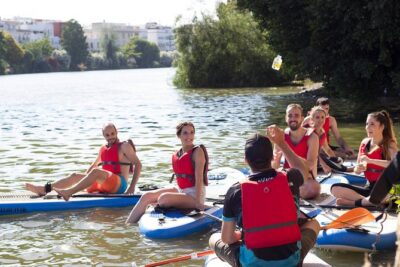
Seville Paddle Surf Sup in the Guadalquivir River
Read our review →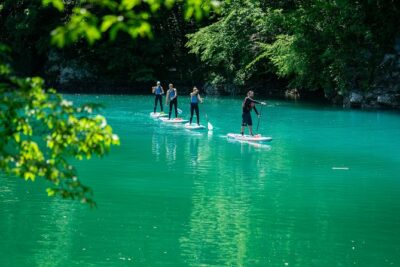

Flatwater Fun: Stand Up Paddleboarding on the Colorado River
Read our review →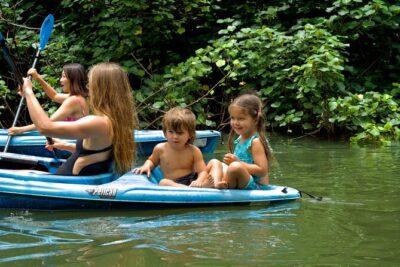
Kahana Bay River to Ocean: Kayak and Stand Up Paddle Board Rental
Read our review →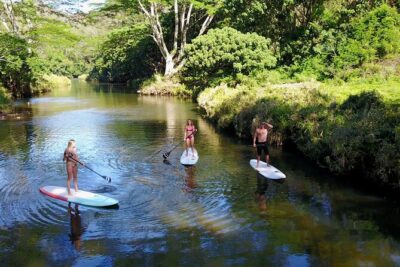
Stand Up Paddle Rental- Wailua River to Secret Falls
Read our review →
Stand Up Paddle Board (SUP) & Kayak in Han River
Read our review →
Adriatic Sea and River Stand-Up Paddleboard Tour
Read our review →Other lists with this paddle on them