
Review · THE UK
Stand up Paddleboarding on the beautiful Thames at Richmond
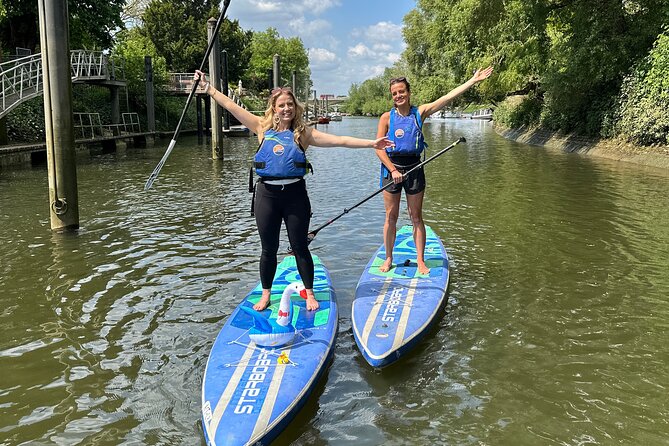
The best part of this Richmond experience is that you learn a new skill while moving through a living stretch of the Thames. From Richmond Bridge, your route may head toward Eel Pie Island and Teddington, or downstream toward Richmond Lock, Kew Gardens, and Chiswick. The tide decides the plan, so each outing has its own rhythm.
I like the maximum group size of six, which gives your instructor room to help with turning, stopping, balance, and getting upright from your knees. I also like the mix of instruction and river time: the safety briefing and land practice last 15 to 20 minutes, leaving roughly 90 to 105 minutes on the water.
The main catch is simple: paddleboarding is physical, and the Thames is not a swimming pool. You do not need to be a strong swimmer, but you must be comfortable falling into the water while wearing a buoyancy aid, and you need enough flexibility to rise from kneeling to standing.
Key points before you book
- Richmond Bridge is your launch point: You meet at the Richmond Bridge Boathouses on Riverside, close to public transport.
- The tide shapes the route: You may paddle upstream toward Teddington and Eel Pie Island, or downstream toward Richmond Lock, Isleworth, Kew Gardens, and Chiswick.
- You get real instruction: The session begins with land-based practice, then moves into work on stopping, turning, steering, and handling wind and waves.
- The group stays small: A maximum of six people means more direct help than you usually get in a large class.
- Safety equipment is supplied: Your board, paddle, and compulsory buoyancy aid are included.
- Wildlife can be part of the trip: You might spot river birds, and one outing even encountered a seal near the Richmond and Teddington stretch.
Starting beside Richmond Bridge
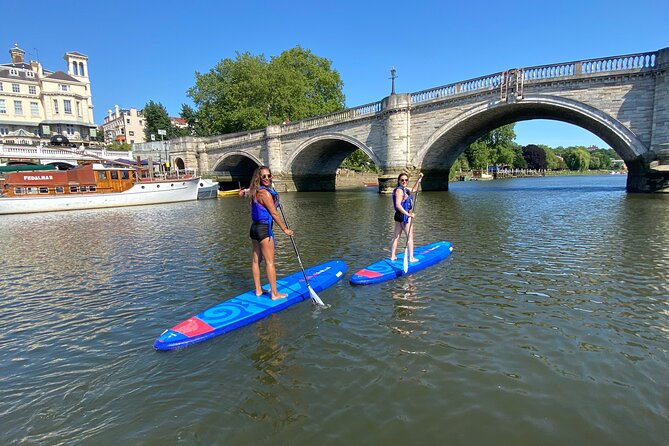
You begin at Richmond Bridge Boathouses, Riverside, Richmond TW9 1TH. This is a practical meeting point for an activity that needs direct river access, and the location puts you close to one of the Thames’s most attractive urban stretches.
The first 15 to 20 minutes take place on the bank. You are fitted with equipment, receive a safety briefing, and practice the basic movements before your board goes onto the river. This part counts toward the two-hour session, but it is time well spent. A few minutes of dry-land instruction can make the first paddle strokes less awkward and help you understand what to do if the board feels unstable.
Your buoyancy aid is compulsory, and the operator supplies the paddleboard and paddle. Bring your own bottled water because it is not included. The supplied information does not list a changing facility, so it is sensible to arrive prepared for an activity where getting wet is possible.
More paddleboard tours around the UK:
- Paddleboarding Around Newquay’s Coastline
★ 5.0 · 117 reviews - Bristol Paddleboarding Tour
★ 5.0 · 92 reviews - Giant Stand Up Paddle Boarding Experience in Newquay
★ 5.0 · 79 reviews
Learning the basics before standing up
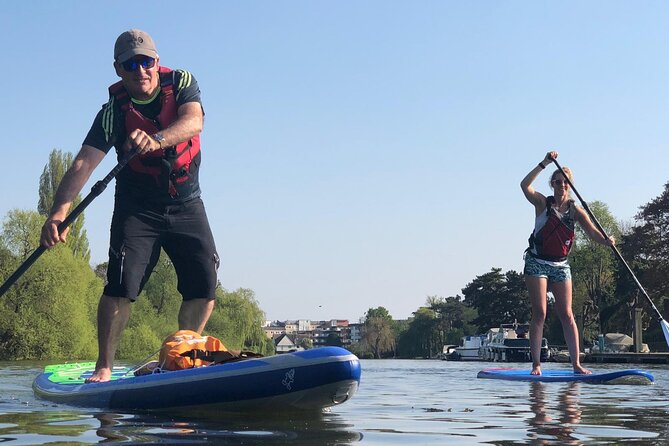
This is an introduction, not a race. You begin from a kneeling position, learning how to control the board and paddle before trying to stand. That progression matters, especially if you have never used a stand-up paddleboard.
The teaching covers practical skills such as stopping, turning, and steering. One outing also involved handling waves and wind while steering around islands and other boats. Conditions can make the session more tiring than it first appears, so do not judge the activity only by its calm start on the riverbank.
The instructors have included Peter, Suzanne, Sarah, Nigel, and Sophy. The strongest pattern in the feedback is patient, clear teaching. Peter helped one beginner focus on having a positive first experience, while Sarah was praised for useful tuition with a complete novice and for making the two-hour session enjoyable. Nigel helped participants build confidence with the basics, and Sophy looked after a family group that included a dog.
That does not mean you will be assigned a particular instructor, but it gives you a useful picture of the teaching style. You can expect hands-on guidance rather than being sent off to work things out alone.
Ninety minutes or more on the Thames
Once the safety work is complete, you head onto the river. The actual paddling time is expected to be about 90 to 105 minutes, with the total activity lasting roughly two hours.
The distance depends on the wind and tide. That is worth understanding before you book. This is not a fixed-distance sightseeing trip where every group follows the same route at the same pace. Some days will allow a longer, easier run. Other days may require more effort against wind or moving water.
The current also determines the direction. You may go upstream toward Eel Pie Island and Teddington, a route that can bring you into the quieter upper reaches around Richmond and Twickenham. Or you may travel downstream toward Richmond Lock, Isleworth, Kew Gardens, and Chiswick.
That changing route is one of the pleasures of the experience, but it also means you should keep your expectations flexible. You will return to the launch point at the end, yet the exact landmarks and distance covered are not fixed in advance.
The Thames as your setting
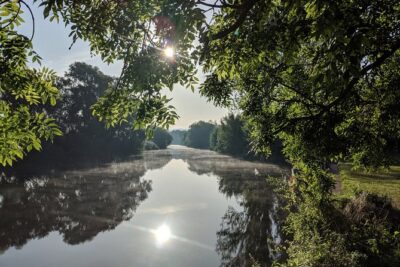
Richmond gives this lesson a stronger sense of place than a short practice session on a small lake. You are learning beside a historic bridge and then moving through a river corridor with islands, locks, birdlife, and changing water conditions.
The wildlife is a pleasant bonus rather than a promise. You might see birds nesting along the river, and a seal has been spotted on one of the outings. The important point is that you are moving quietly at water level, so the river can feel more immediate than it does from the towpath.
You should also expect an active setting. Other boats may be present, and your instructor will help you steer around them. Wind, small waves, and the current can turn a simple paddle into a proper workout. One participant described the session as tiring by the end, which is useful advice for anyone arriving in casual sightseeing clothes and expecting a gentle float.
The Thames here is scenic, but it is still a working river. That combination gives the lesson some character. You are not just practicing balance in isolation. You are learning how a board responds in moving water and around normal river activity.
Same water, a different way to stand on it:
- Paddle Boarding on Derwent Water
★ 5.0 · 62 reviews - Stand-up Paddleboard SUP Safari on The River Avon For Beginners
★ 5.0 · 54 reviews - Stand Up Paddle Boarding Journey Down Bude Canal
★ 5.0 · 44 reviews - Paddleboarding Adventures in Tonbridge
★ 5.0 · 31 reviews
What the small group changes
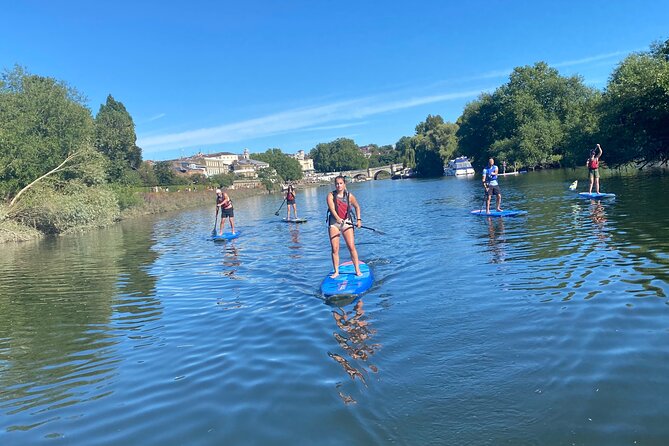
A maximum of six people is one of the strongest practical reasons to choose this experience. A small group gives your instructor more chances to correct your stance, demonstrate a turn, or help you regain confidence after a wobble.
It also keeps the outing more personal. Families can learn together, and the format has worked for complete beginners as well as people who already had enough interest to want more tips. One family brought a dog named Roxy, so service animals are allowed, though you should still consider how your own dog would cope with a board, water, and a moving group.
Small does not mean private. You may still share the session with other participants, and the pace will reflect the group’s ability and the day’s conditions. But six is a manageable number for an instructor-led introduction, especially compared with a large class where you may spend much of the session waiting for help.
The included photos are another useful touch. Your instructor will take a few snapped pictures during the experience, giving you a record of the session without requiring you to risk a phone on the board. The information does not promise a large edited photo package, so think of this as a few informal memories rather than a professional shoot.
Is $89.13 good value?
At $89.13 per person, this is not the cheapest way to get onto the Thames. The value comes from what is bundled into the two hours: board hire, paddle hire, a compulsory buoyancy aid, safety instruction, land-based training, guided river time, a small group, and a few photos.
For a first lesson, I think that package makes sense. You are paying for instruction and supervision as much as for equipment. Buying or renting a board without guidance would not give you the same chance to learn safe turning, stopping, and river awareness.
The price is easier to justify if you want a proper introduction rather than a short recreational rental. It is less compelling if you already paddle confidently and simply want to cover a set distance. The route is tide-dependent, and the session is designed around learning, so experienced paddlers may find the teaching pace slow.
The average booking lead time is 53 days. That suggests you should not assume a preferred date will remain open, especially if you need a weekend or a particular season. The experience is offered in English and comes with a mobile ticket, which keeps the booking process simple.
Who will enjoy this Richmond paddle?
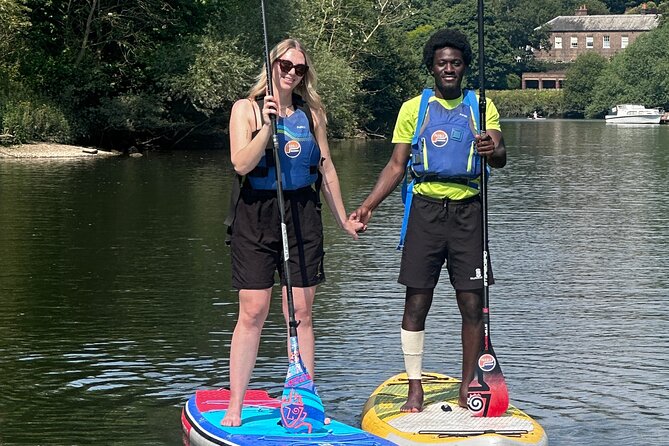
This suits adults and families who want to try paddleboarding with guidance close at hand. Most people can participate, provided they are comfortable with the physical demands and the possibility of entering the water.
You do not need to be a proficient swimmer. You do need to be comfortable falling into the Thames while wearing a buoyancy aid. You also need enough flexibility and strength to move from kneeling to standing on the board.
I would choose this for:
- A first paddleboarding lesson
- Families looking for an active two-hour outing
- Anyone who prefers a small class
- People who enjoy wildlife and changing river scenery
- Beginners who want patient help with balance and steering
- Paddlers who want to learn on moving water rather than in a flat pool
I would think twice if you dislike getting wet, have difficulty standing from kneeling, or want a quiet sightseeing cruise. You are expected to take part, not simply sit back and look at Richmond.
Timing, weather, and practical details
The listed opening hours are 9:00 AM to 6:00 PM from Monday through Sunday. The exact route and paddling conditions depend on the tide and wind, so the same start point can produce a different outing on another date.
Good weather is required. If poor weather forces a cancellation, you can choose a different date or receive a full refund. You can also cancel for a full refund up to 24 hours before the start time. Cancellations or changes made within 24 hours are not accepted for a refund.
Confirmation is provided when you book. The meeting point is near public transportation, and the activity finishes back where it starts. Service animals are allowed.
Wear clothing that can handle an active session and possible splashes. Since bottled water is not supplied, bring your own. The supplied details do not state a minimum age, clothing list, storage policy, or exact changing arrangements, so ask the operator directly if any of those details affect your plans.
Should you book Paddle Richmond?
Book it if you want a friendly, coached introduction to stand-up paddleboarding in a scenic part of London. The small group, patient instruction, supplied safety gear, and long stretch of river time give beginners a fair chance to learn without feeling abandoned.
The strongest reason to go is the balance of structure and freedom. You receive clear instruction on the bank, then spend most of the session practicing on the Thames, with the tide choosing the route. You may paddle toward Teddington and Eel Pie Island, or pass in the direction of Richmond Lock, Kew Gardens, and Chiswick.
Skip it if you want a fixed itinerary, guaranteed wildlife, or a relaxed boat ride. For everyone else, especially a first-timer who wants encouragement and a little challenge, this is a worthwhile way to meet the Thames at water level.
FAQ
Where does the paddleboarding experience begin?
It begins at Richmond Bridge Boathouses, Riverside, Richmond TW9 1TH, UK.
Where does the activity finish?
The activity finishes back at the meeting point.
How long does the experience last?
The full session lasts approximately two hours. You can expect to spend about 90 to 105 minutes paddling on the water, with 15 to 20 minutes used for fitting equipment, safety instruction, and land-based practice.
What equipment is included?
A paddleboard, paddle, and buoyancy aid are included. Buoyancy aids are compulsory on every session.
Do I need to be a strong swimmer?
No. You do not need to be a proficient swimmer, but you must be comfortable falling into the water while wearing a buoyancy aid.
How large is the group?
The maximum group size is six people.
Which route will the group take?
The route depends on the tide. You may travel upstream toward Eel Pie Island and Teddington, or downstream toward Richmond Lock, Isleworth, Kew Gardens, and Chiswick.
Is bottled water included?
No. Bottled water is not included, so bring your own.
What happens if the weather is poor?
The experience requires good weather. If it is canceled because of poor weather, you will be offered another date or a full refund.
Freshly launched around the UK
- Stand Up Paddleboarding Taster Session★ 5.0 · 16 reviews
- Stand Up Paddleboarding Lesson in Historic Portknockie Harbour★ 5.0 · 8 reviews
- Half day Paddleboarding exploration on the Dart★ 5.0 · 3 reviews
- Stand Up Paddle Boarding★ 5.0 · 13 reviews
- 1:1 Private Paddleboarding Tour For Beginners on The River Avon★ 5.0 · 20 reviews
- Paddle Boarding with Seven Sister View★ 3.0 · 2 reviews
- Stand Up Paddle Boarding in Aberfeldy★ 5.0 · 12 reviews
- Totnes: Paddleboard adventure on the River Dart★ 5.0 · 2 reviews
UK Paddleboard Tours, compared.
Giant Stand Up Paddle Boarding Experience in Newquay
Read our review →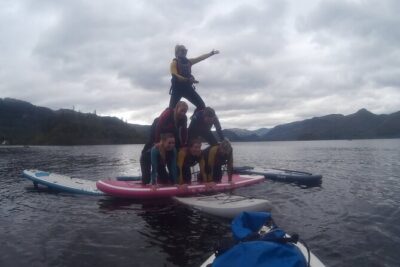
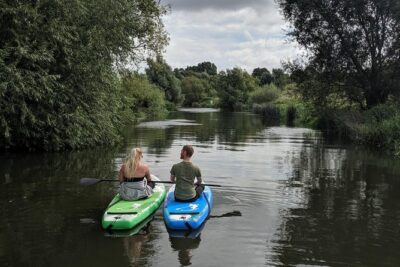
Stand-up Paddleboard SUP Safari on The River Avon For Beginners
Read our review →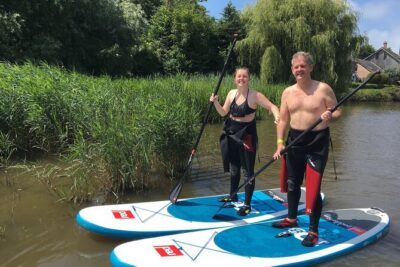
Stand Up Paddle Boarding Journey Down Bude Canal
Read our review →
1:1 Private Paddleboarding Tour For Beginners on The River Avon
Read our review →Other lists with this paddle on them