
Review · JAPAN
Peaceful SUP Experience on Hiroshima’s Serene Rivers
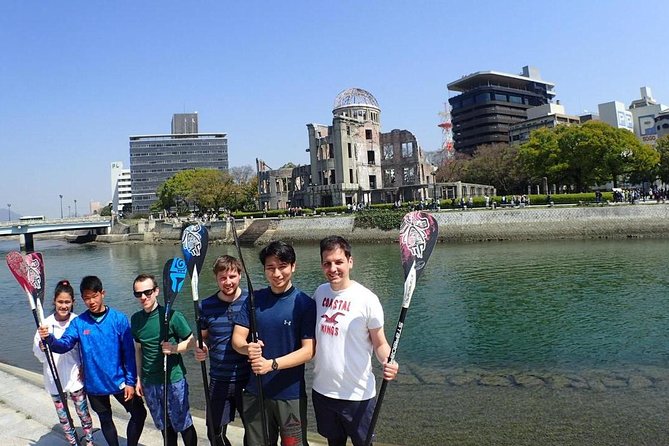
Hiroshima’s most moving view may come from the water. This small-group SUP trip follows the Honkawa River for about 3 kilometers, linking the city’s modern riverfront with Peace Memorial Park and the Atomic Bomb Dome. You get a calm outdoor activity, but also a fresh way to think about Hiroshima’s past and present.
I like two things here. First, the route gives you a view of Hiroshima that pedestrians do not get, with greenery, bridges, and city buildings sliding by at water level. Second, the instruction is designed to make a first SUP outing manageable, with a land lesson, paddle stretches, and a warm-up before you launch. The main drawback is that the start time can shift from 8:30 a.m. to as late as 4 p.m. to match the tide, so this is not ideal if your Hiroshima schedule is tightly packed.
What makes this river trip different
- A 3-kilometer round trip to Peace Memorial Park: You paddle through central Hiroshima toward one of Japan’s most important places.
- A water-level view of the Atomic Bomb Dome: The river offers a quieter angle on a landmark most people see from the streets.
- A useful first lesson for beginners: The guide covers SUP technique, stretching, and warm-up exercises before you enter the river.
- A small group of no more than 10 people: The guide can watch the group more closely than on a large commercial outing.
- A tour tied to Hiroshima’s six rivers: The guide explains how waterways shaped the city and how the 1945 bombing changed people’s relationship with them.
- Tide-based scheduling: The changing start time is inconvenient, but it helps the operator choose safer and more suitable river conditions.
Hiroshima from the Honkawa River
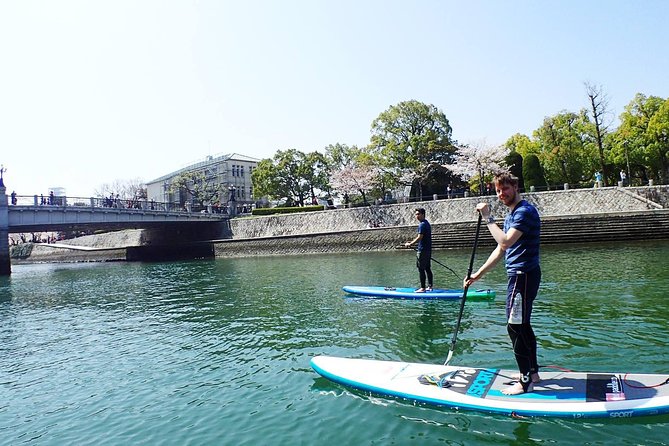
Hiroshima is often described as a water city because six rivers shape its center. From land, you notice bridges and banks. From a SUP board, the arrangement makes more sense. You are moving through the waterways that helped carry materials, connect neighborhoods, and support industry long before the city became known around the world for its peace message.
This outing uses the Honkawa River. The full route covers roughly 3 kilometers in a round trip, with about an hour spent paddling out toward Peace Memorial Park and another hour and a half returning after the park stop. The pace is intended to be calm rather than athletic.
That matters because SUP can look harder than it is. You need balance, but you are not being asked to race or cover a long distance. You can expect to work your legs and core, and you may fall into the river, but the route is short enough for a beginner who is reasonably comfortable in the water.
The river also gives the experience a reflective tone. The waterways once supported the movement of charcoal and iron materials toward places such as Osaka. On August 6, 1945, many people died in Hiroshima’s rivers after the atomic bombing. The tour connects that painful history with the peaceful city you see today, without asking you to treat the river as just a recreational playground.
More River and Canal SUP Tours in Japan:
- Ishigaki Island: 2-Hour Miyara River SUP or Canoeing Tour
★ 4.6 · 81 reviews - Iriomote island: Mangrove River SUP or Canoe Cruising Tour
★ 4.7 · 16 reviews - SUP downriver tour at Niyodo river
★ 5.0 · 11 reviews
Before you launch at Kusunokicho
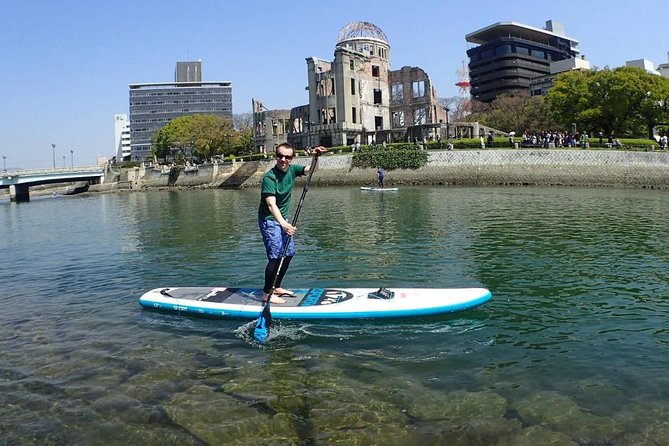
The meeting point is Magic Island SUP and SURF shop at 1-chōme-15-4 Kusunokichō, in Hiroshima’s Nishi Ward. The activity begins and ends here, and luggage storage, toilets, showers, and changing rooms are available. The meeting point is near public transportation, though the supplied details do not specify a station or walking time, so check your route before the day.
Allow time to change and get organized. Wear clothing that can get wet, such as a rash guard, board shorts, leggings, or similar comfortable sportswear. A hat, sunglasses, and sandals are suggested. Use waterproof protection for your phone, since falling into the river is possible and the guide may take promotional photographs during the activity.
In colder weather, a wetsuit is provided at no extra charge. That is a useful inclusion, since you do not need to pack or rent one separately. In summer, you will likely want quick-drying clothing and sun protection, but the tour information does not promise a particular temperature or water condition.
The group limit is 10 people. That is large enough to give the outing some company, yet small enough for the guide to keep an eye on paddlers. English and Japanese support are available. No individual guide names are provided, so you should not book expecting a particular person.
The land lesson makes the first paddle easier
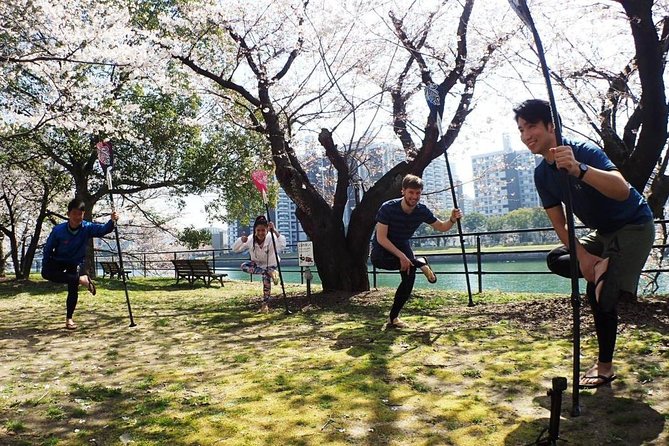
The first half hour is spent on land. The guide explains how to use the board and paddle, then leads stretches and warm-up exercises near the large gangi, or waterside steps, by the camphor tree.
This part is more important than it may sound. If you have never used a SUP board, your first minutes on the water can feel wobbly. A clear land demonstration lets you learn the basic movements before you have to think about balance, current, and steering at the same time.
The activity is recommended for people with swimming experience. That is sensible, because the natural river setting brings risks that an indoor pool does not. You must sign a consent form, follow the guide’s directions, and accept that the instructor may change or stop parts of the route after checking conditions.
Participants must be at least 10 years old and under 110 kilograms. Alcohol use on the day is not allowed. These are firm participation rules, not minor suggestions, so plan your day around them.
Paddling toward Peace Memorial Park
After the instruction, the group uses the gangi to reach the river. The boards are floated, everyone gets positioned, and the group sets off on the Honkawa River. The first paddle section lasts about one hour.
The appeal is the changing view. You see Hiroshima from a lower, slower angle, with the river corridor guiding your attention through the city. The scenery includes greenery and urban views, and the water helps you notice how close the city’s major landmarks are to its waterways.
The river route also gives the guide room to explain Hiroshima’s development. The six rivers were not simply attractive features. They were working routes connected to manufacturing and transport. Understanding that practical role adds substance to what might otherwise be a pleasant paddle around town.
Do not expect a wilderness outing. This is a city river experience, and the attraction is the contrast between moving water, built-up Hiroshima, and important historic sites. The calm setting can make the approach to Peace Memorial Park feel different from a quick walk between museums and monuments.
For a first-time paddler, the guide’s pace and support matter. The available comments describe careful instruction that helped a beginner feel at ease, along with a friendly attitude and attention to comfort. That matches the structure of the outing: a lesson first, a short route, and a guide present throughout.
More paddleboard tours around Japan:
- Okinawa Iriomote Mangrove SUP or Canoe Tour
★ 5.0 · 214 reviews - Okinawa Ishigaki Mangrove SUP or Canoe Tour
★ 5.0 · 147 reviews - Okinawa Iriomote SUP or Canoe and Sightseeing in Yubujima Island
★ 5.0 · 124 reviews - Iriomote Island 1-Day Snorkeling & Mangrove SUP or Canoe
★ 5.0 · 119 reviews
A water-level approach to the Atomic Bomb Dome
At about the two-hour mark, the group lands at Peace Memorial Park. An English-speaking guide leads the way during this stop. The park is the emotional center of the outing, and the river arrival gives you a pause from the normal city route.
You will not simply paddle past the Atomic Bomb Dome and call it history. The stop provides a chance to connect the river, the park, and the bombing’s human cost. Hiroshima’s waterways became places of death in 1945, so returning to them in a peaceful setting carries meaning. The activity’s central idea is not to erase that history, but to see how the city lives with it.
The schedule allows about 30 minutes at Peace Memorial Park before the return paddle. That is enough for a guided orientation and a moment to look around, but not enough for a full visit to every memorial, museum, or exhibit. If you want detailed time inside the Hiroshima Peace Memorial Museum, plan a separate visit on another day or before or after this activity, depending on the final tide-based schedule.
The river view of the Atomic Bomb Dome is one of the strongest reasons to book. From the water, the building is part of a wider scene rather than a single stop on a walking route. You may find the quieter setting helpful if you want time to think, though the experience is still an active tour with a group and a schedule.
The return trip takes more time than the outward leg
The return SUP journey is scheduled for about an hour and a half. That is longer than the initial outward paddle, so be ready for a substantial period on the board after the park stop.
This extra time may be welcome if you enjoy being on the water and want more space to practice. It also means the activity is not just a short photo stop with a board rental attached. You get a real outing, with enough time to settle into the paddle stroke and take in the river views.
At the same time, you should judge your fitness honestly. Even a gentle SUP session can tire your shoulders, legs, and lower back. The guide may alter the route or timing for safety, and the actual finish can vary. Do not schedule a nonrefundable reservation immediately afterward.
After reaching the starting area, you clean up, change, and finish back at Magic Island. The total experience is about 3 hours and 30 minutes, but tide, weather, safety decisions, and group pace can affect the exact end time.
Why the tide changes the schedule
The advertised start time is 8:30 a.m., but the organizer sets the final meeting time according to the river’s tide and the season. It may shift anywhere from 8:30 a.m. to 4 p.m. You should receive the confirmed timing before the reservation is finalized.
This is the tour’s biggest planning issue. A later start can affect museum visits, train plans, meals, and other bookings. If your Hiroshima stay is short, leave a wide gap around this activity. The schedule is not a flaw in the operation so much as a result of using a tidal river, but it does mean you need flexibility.
Weather is another factor. The activity can proceed in light rain, but the operator may cancel because of unsafe conditions. For a cancellation decided in advance, a full refund is issued, with notice by email by 3 p.m. the day before. The general cancellation policy is strict: once booked, the experience is nonrefundable and cannot be changed for any reason.
Because confirmation is subject to availability and may arrive within 48 hours, avoid treating the booking as fully settled until you receive confirmation. The tour has a maximum of 10 participants, which helps keep the group manageable but can also limit availability on popular dates.
Is the $104.91 price fair?
At $104.91 per person, this is not a cheap way to see Hiroshima. The price includes the SUP board, instruction, guide fee in English or Japanese, and a cold-weather wetsuit when needed. It does not include a drink.
The value comes from combining several services that would be separate on your own: equipment, safety instruction, a guided river route, a Peace Memorial Park stop, and historical context. You are also paying for a small group rather than simply renting a board and being sent onto the water.
I think the price makes the most sense if you want an activity that adds a new angle to Hiroshima rather than another standard sightseeing walk. It is less compelling if your main goal is only to see the Atomic Bomb Dome, since the park itself is accessible without this cost.
The tour also asks for a large block of your day. Add the changing time and schedule flexibility to the 3.5-hour experience. For people who value hands-on activities and unusual city views, that time and price can be justified. For visitors on a strict budget or a packed one-day itinerary, it may not be the best use of money.
Who should book this Hiroshima SUP experience?
This outing suits adults and children over 10 who can swim, follow instructions, and accept getting wet. It is especially good for first-time SUP users who want a structured introduction rather than an independent rental.
You should consider it if you enjoy:
- Seeing cities from the water
- Small-group activities
- Gentle physical exercise
- Guided history connected to a real place
- A different view of the Atomic Bomb Dome
- Flexible plans that can absorb a tide-based schedule
It is less suitable if you dislike balance sports, cannot swim, need a fixed start time, or want a long museum visit during the same morning. People with health or mobility concerns should assess the launch, landing, board balance, and river conditions carefully before booking.
Bring only what you need. Luggage storage is available, but a waterproof phone case remains important. There is no free Wi-Fi, and drinks are not included, so plan your water needs before setting off.
FAQ
How long does the Hiroshima SUP experience last?
The scheduled duration is approximately 3 hours and 30 minutes. The actual finish time can vary because of tides, weather, safety decisions, and group conditions.
Where does the tour start and end?
It starts and ends at Magic Island SUP and SURF shop, 1-chōme-15-4 Kusunokichō, Nishi Ward, Hiroshima, 733-0002, Japan.
What languages are available?
The activity offers Japanese and English language support. An English guide leads the Peace Memorial Park stop.
Is SUP equipment included?
Yes. Instruction and SUP board rental are included. A wetsuit is also provided during cold weather.
What should I wear?
Wear comfortable clothing that can get wet, such as a rash guard, board shorts, leggings, a hat, sunglasses, and sandals. In winter, a wetsuit is available at no extra charge.
Are there age or weight requirements?
Participants must be over 10 years old and under 110 kilograms. Swimming experience is recommended.
Can the tour be canceled because of weather?
Yes. The organizer may cancel because of weather, though the experience can proceed in light rain. If the organizer cancels in advance, a full refund is issued. The activity is otherwise nonrefundable and cannot be changed for any reason.
Should you book it?
Book this SUP trip if you want Hiroshima to feel more three-dimensional. The route combines a calm river outing, a water-level view of the Atomic Bomb Dome, and a thoughtful connection between the city’s waterways and its wartime past. The careful beginner instruction and group limit of 10 make it a sensible choice for a first SUP experience.
Skip it if your schedule cannot handle a tide-based start time, if you are uncomfortable in the water, or if you want to spend several hours inside the peace museums instead. For the right person, this is not just a board rental with sightseeing attached. It is a quiet, physical way to see how Hiroshima’s rivers connect its past with the peaceful city you find today.
Freshly launched around Japan
- Okinawa West Coast 3-Hour Paddle-boarding adventures★ 5.0 · 17 reviews
- Okinawa East Coast 3-hour Marine Experience: Kayak or SUP★ 5.0 · 22 reviews
- Okinawa Miyakojima 1 day SUP x Pumpkin Cave Exploration x Canoeing★ 5.0 · 7 reviews
- [Miyako Island/Full Day] Sea Turtle Snorkeling & SUP or Canoe★ 5.0 · 11 reviews
- Miyako Two Activities in Half Day SUP and Sea Turtle Snorkeling★ 5.0 · 9 reviews
- [Miyako Island / Evening] Choice of Sunset SUP or Canoe Tour★ 5.0 · 19 reviews
- SUP downriver tour at Niyodo river★ 5.0 · 11 reviews
- Kagoshima Volcano Sunrise SUP Activity Inc. Breakfast & Transport★ 5.0 · 3 reviews
Japan Paddleboard Tours, compared.
Okinawa Iriomote SUP or Canoe and Sightseeing in Yubujima Island
Read our review →
Iriomote Island 1-Day Snorkeling & Mangrove SUP or Canoe
Read our review →
Okinawa Ishigaki Kabira Bay SUP or Canoe and Blue Cave Snorkeling
Read our review →
[Ishigaki]Mangrove SUP/Canoe + Blue Cave Snorkeling
Read our review →
Ishigaki Island: 2-Hour Miyara River SUP or Canoeing Tour
Read our review →Other lists with this paddle on them